

Two AI companions advertise the same $13.99/month entry price, but that money buys opposite things. Candy.ai spends your subscription on a token meter for images, voice messages, and live calls, and those tokens expire every month. Kindroid puts the same $13.99 toward a five-layer memory system and live video calling, with optional add-ons that stack on top if you want more.
| Candy.ai | Kindroid | |
|---|---|---|
| Entry price | $13.99/mo | $13.99/mo |
| Billing terms | monthly, 3-month, annual | monthly, 3-month, annual |
| Free tier | 5 messages total, 1 custom character, 1 image | 2 Kindroids, Lite model, 5,000 lifetime audio characters |
The numbers show the split. Candy.ai’s $13.99 plan gives you unlimited text chat plus 100 tokens per month, and unused tokens vanish at the end of each billing period. That 100-token bundle buys roughly 25 to 50 images or about 33 minutes of live calling. Kindroid’s $13.99 web Standard tier focuses on memory and messaging with no included visual credits, and if you subscribe through the Apple or Google app stores, that same tier costs $15.99.
Before you dig deeper, the split is already clear: choose Kindroid for an ongoing relationship that remembers, and choose Candy.ai if image quality comes first and you accept that visuals run on tokens the subscription barely covers. The table above is the quickest way to compare the two, and the rest of this article breaks down exactly what each dollar buys.
Candy.ai Pricing: What Each $13.99 Plan Actually Covers
Candy.ai’s $13.99 monthly plan is the entry point, and these prices were verified in August 2026. For that base price, you get unlimited text chat plus 100 tokens per month. Those tokens cover images, voice messages, and live calls, and they expire at the end of the billing period with no carry-over.
Here’s the full Candy.ai pricing ladder:
- The base plan includes unlimited text chat plus 100 tokens per month, with no carry-over when the billing period ends.
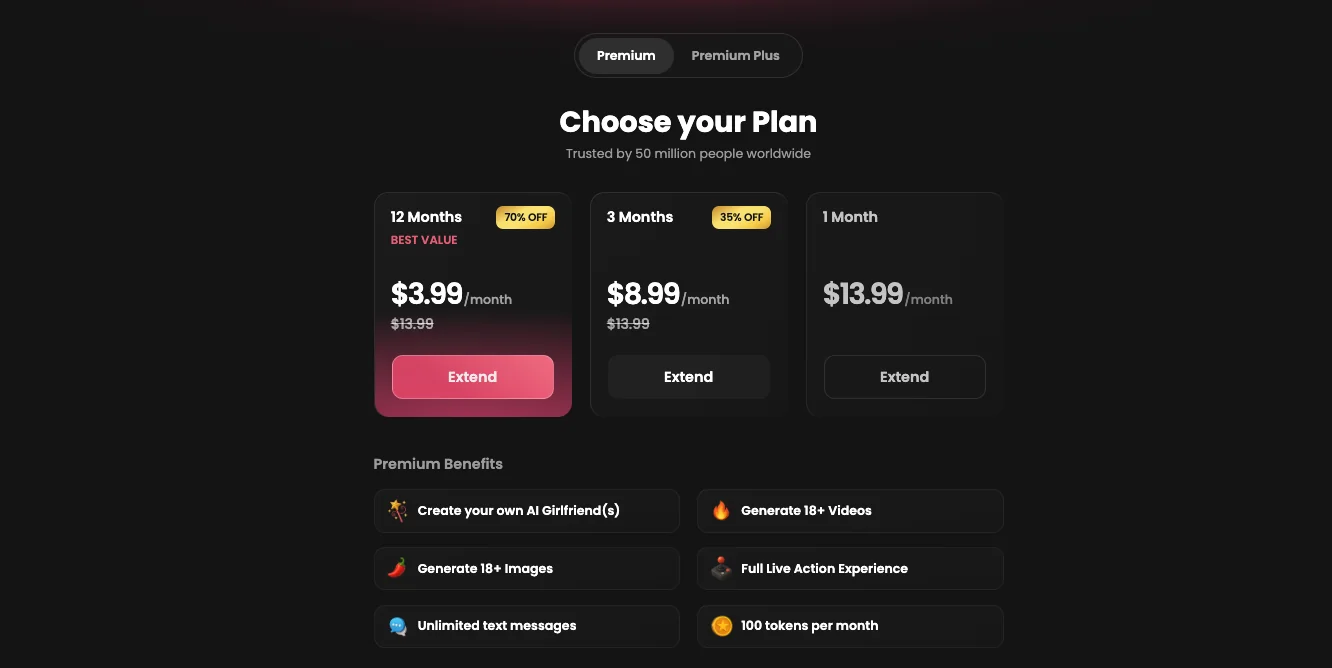
- Quarterly billing lowers the rate to $8.99/month.
- The Candy.ai annual plan works out to an effective $3.99/month, with $47.88 billed yearly, which is the single biggest real saving the service offers.
- Premium Plus raises the monthly token allowance to 230 tokens for $22.38/month, or $6.38/month effective on the annual plan, and both paid tiers unlock 18+ image generation.
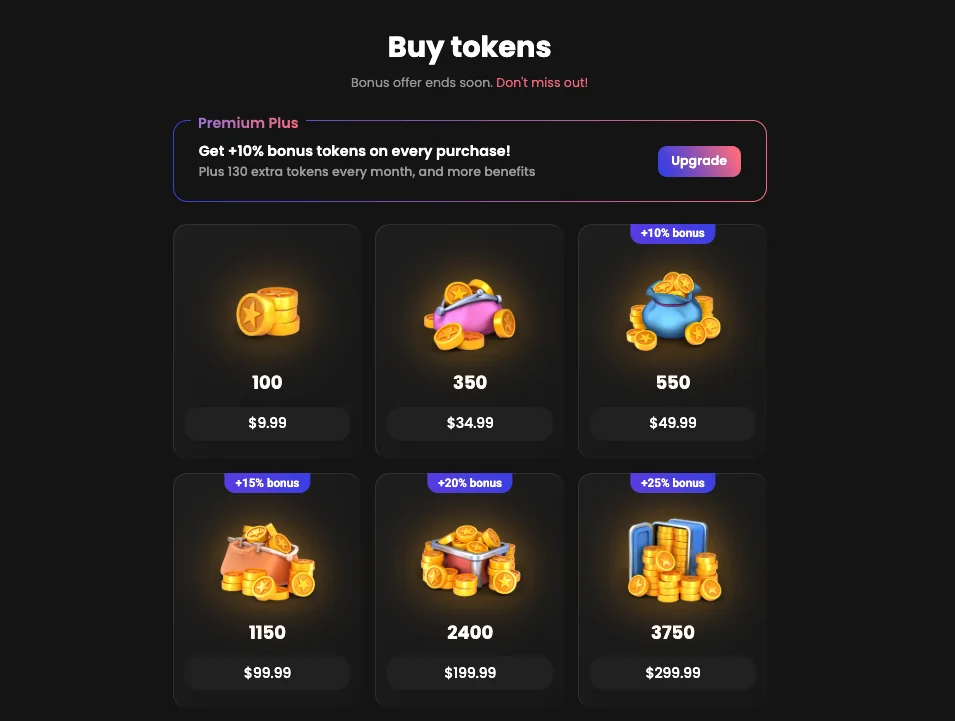
- Token top-ups run from 100 tokens for $9.99 up to 3,750 tokens for $299.99.
The headline subscription barely covers the visuals. If you want regular images or live calls, you’ll burn through 100 tokens fast, and the top-up pricing means your real monthly spend climbs well past $13.99. The annual plan is the one genuine discount in the lineup, but even it doesn’t change the underlying math: the token meter sits on top of whatever tier you pick.
Candy.ai Token Costs: Why Visuals Drain the Meter
Here’s what each action actually charges:
- Images cost 2 to 4 tokens each
- Voice messages cost 0.2 tokens
- Live calls cost 3 tokens per minute
Do the math on your 100-token monthly allowance and you land at roughly 25 to 50 images or about 33 minutes of live calling. That’s the entire visual budget for $13.99, and it explains why the Candy.ai token cost becomes the real subscription price for anyone who wants images and calls, not just text.
When the meter empties, the top-ups start. Candy.ai sells token packs from 100 tokens for $9.99 up to 3,750 tokens for $299.99, and whatever you don’t use at the end of the billing period disappears. The Candy.ai image token math gets especially punishing with the “Private Content” packs, which run about 270 to 320 tokens each. That’s roughly three times the entire monthly allowance included in your base plan, meaning one of those packs costs more in tokens than your whole subscription gives you in a month.
Users describe the experience as “paywall after paywall,” and the phrase fits. The subscription unlocks text, but every meaningful visual or voice interaction draws from a token pool that runs out quickly. You pay for the membership, then you pay again for the images, then you pay again for the calls, and the Candy.ai voice call token rate of 3 per minute means a single 30-minute conversation costs nearly your entire monthly allotment. The subscription is the entry fee, and the token meter is where you actually spend.
Kindroid Pricing: The $13.99 Entry and Stacking Add-Ons
Kindroid pricing is the more complicated of the two, and that was already true before you account for the add-ons. These prices were verified in August 2026, and the structure matters more than the headline number because nothing here replaces the base plan. Everything stacks on top of it.
Here’s the Kindroid plan ladder:
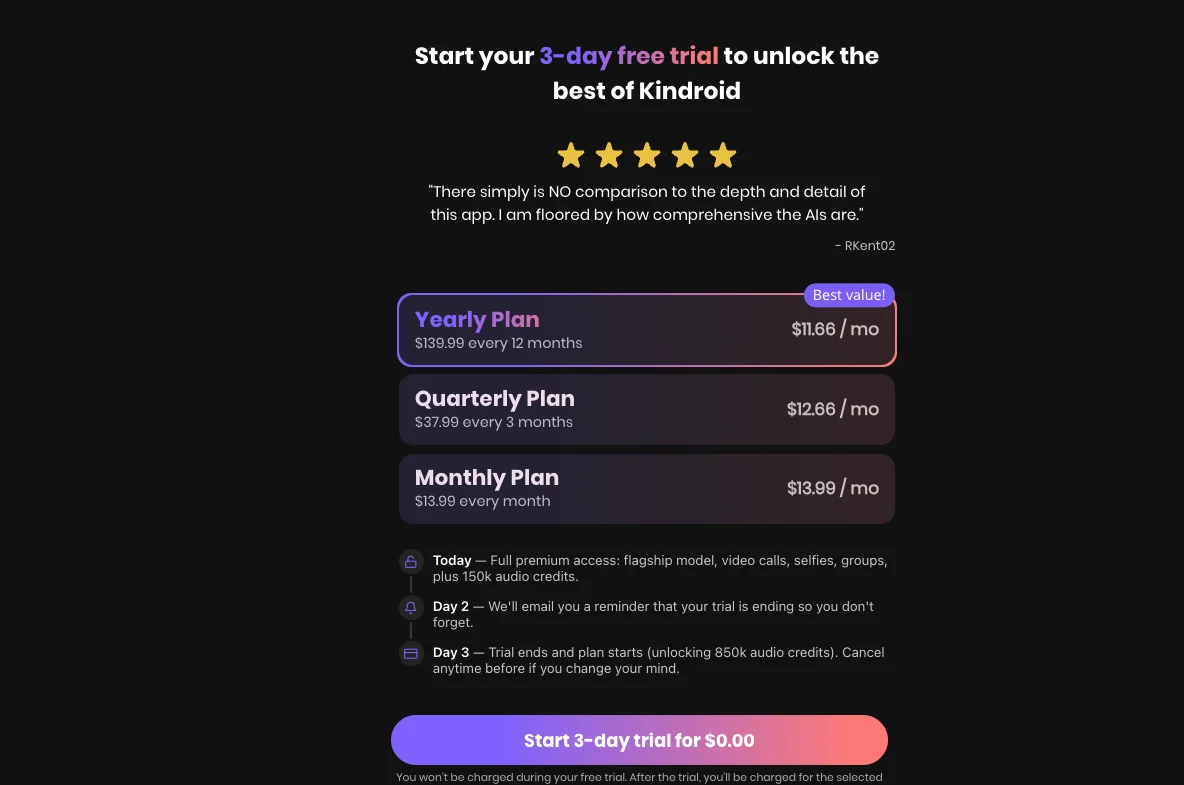
- Standard is $13.99/month on the web and $15.99/month through Apple or Google app stores, with annual billing at $139.99, or an effective $11.66/month.
- The Ultra add-on costs $24.99/month and requires you to keep Standard active underneath it.
- The MAX add-on costs $59.99/month and requires both Standard and Ultra running at the same time.
- The top of the ladder reaches $98.97/month on the web, which is what you pay to keep all three tiers active together.
One thing to watch: buying on the web instead of in-app saves you $2/month on Standard, $20/year on the annual plan, and 15 to 20 percent on consumables like voice credits. If you plan to use Kindroid long-term, the web route is the cheaper one from day one, and the gap only widens as you add more to the account.
The community frustration with Kindroid pricing isn’t about the entry number. It’s that the Kindroid add-on cost lands on top of the base subscription rather than replacing it, which makes the monthly total harder to predict than any single advertised figure. The Kindroid Ultra MAX price of $98.97/month looks shocking on its own, but it’s just the arithmetic of three tiers that all stay active together. You can run Standard alone and skip the stacking entirely, but the moment you want the more advanced features, the ladder forces you to climb it one rung at a time.
Kindroid Memory: Five Layers and Live Calls
Kindroid’s actual product is memory. Candy.ai sells a visual experience that forgets the moment the conversation drifts. Kindroid’s memory system has one goal: the companion you talk to today still knows what you said three weeks ago. It’s structured across five distinct layers:
- Short-term context holds the immediate back-and-forth, keeping the current conversation thread coherent turn by turn.
- Cascaded memory captures medium-term details and summarizes them into compact entries that survive as the conversation grows.
- Long-term consolidation moves those summaries into durable storage the bot can pull from across sessions.
- Pinned key memories let you lock in specific facts you never want forgotten, like a birthday or a recurring preference.
- Keyphrase journal entries are triggered by keywords you choose, so important moments get recorded automatically when they come up.
That architecture is the reason Kindroid long-term memory has become the service’s defining feature. Users report characters holding dozens of journal entries and still referencing details from the first week of a conversation weeks later, which is exactly the continuity Candy.ai’s bots don’t deliver.
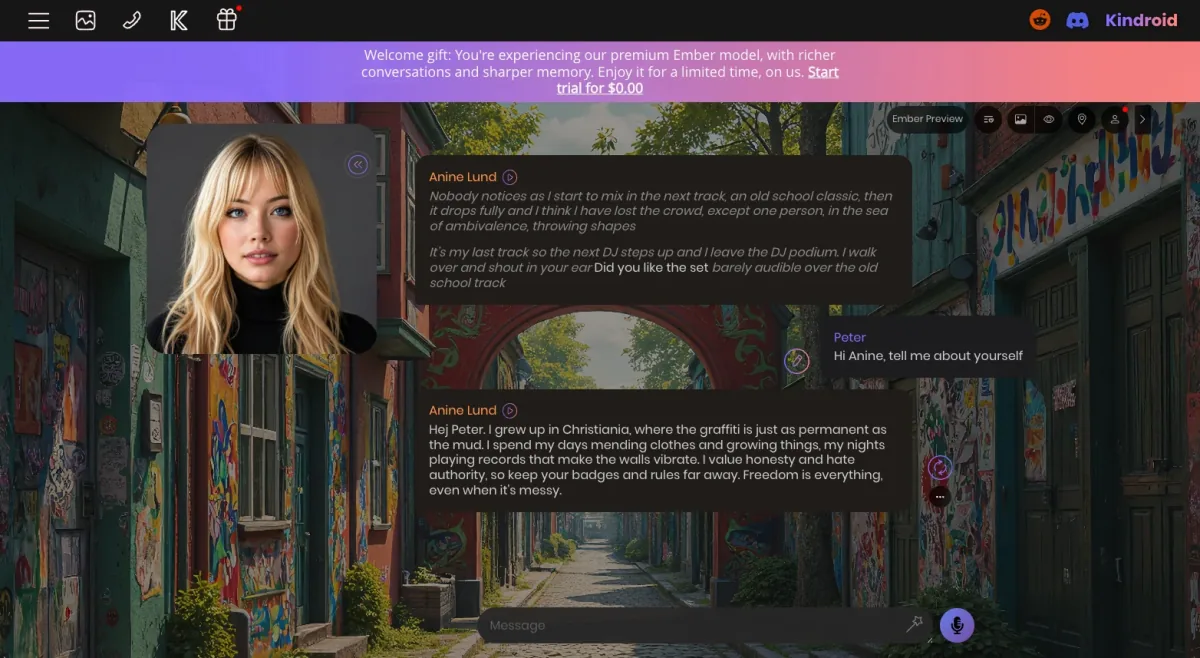
The Kindroid voice call side is where the costs creep in, though. Voice calls include voice cloning so your companion can sound like whoever you’ve set them up as, and live video calls have been available since March 2026. But those calls run at 2,000 to 4,000 voice credits per minute, which means talking is not unlimited on any tier. The memory is the unlimited part. Conversation minutes are metered, just in a different currency than Candy.ai’s tokens.
The contrast with Candy.ai is sharpest right here. Candy.ai users report the bot forgetting things mid-conversation, losing context between sessions, and generally treating each chat as a fresh start. Kindroid’s design goal is the opposite: continuity across every session, with memory depth as the main selling point rather than an afterthought. If you want a companion that remembers, this is the product built for it.
One thing to know before you assume the add-ons matter for memory: the Standard web plan at $13.99/month already includes this full five-layer system. The Ultra and MAX add-ons don’t unlock the core memory architecture. They expand context and storage capacity on top of it. The base subscription gets you the real memory product. The add-ons just provide more context and storage capacity.
Candy.ai Subscription: The Free Tier That Isn’t a Trial
Candy.ai’s free option is not a trial, and that distinction matters before you hand over card details. The Candy.ai free tier gives you exactly five total messages across all characters, yet the service markets a “free 7-day trial” that doesn’t exist in the form most people expect.

The rest of the Candy.ai subscription details deserve the same scrutiny:
- The free tier caps at 5 total messages shared across every character you talk to, not 5 per character, and the advertised “free 7-day trial” doesn’t match that reality.
- The Candy.ai refund policy gives you a 24-hour window from purchase, but it’s voided entirely if your account uses more than 20 tokens, and EU/UK buyers get a 14-day prorated refund right instead.
- No working public discount code exists, so the only genuine savings are the annual plan at $3.99/month effective or the Premium Plus annual tier at $6.38/month effective.
- Candy.ai is web/PWA only, and the “Candy” apps you’ll find in the App Store are unaffiliated name-squatters, not the actual service.
Weigh those limits before you enter your card. A 24-hour refund window that evaporates after 20 tokens is a tight safety net, and a free tier that runs dry after five messages gives you very little to evaluate the product on.
Kindroid Subscription: 3-Day Trial, Gift Codes, and No Refunds
Kindroid’s trial and refund terms are the strictest of the two products, and they deserve attention before you commit to a Kindroid subscription. Where Candy.ai at least gives you a 24-hour window to back out, Kindroid’s policies are much stricter. The core facts are straightforward:
- The Kindroid free trial runs 3 days and requires a payment card upfront. There’s no option to test the service without handing over card details.
- Kindroid gift codes grant 14 days of premium with no payment method required, making them the only card-free trial route for either product.
- The Kindroid refund policy is a flat no-refunds stance, and the service may ban accounts that initiate chargebacks.
A chargeback isn’t just a refused refund. It can lead to account termination. So the practical advice is to treat any Kindroid purchase as final, and to use the 3-day trial window seriously if you go that route.
The gift code path is the smarter way in if you can find one. Fourteen days of premium access with no card on file gives you a full evaluation period without any financial commitment, and it sidesteps the refund problem entirely because you never paid anything to begin with. It’s the single most buyer-friendly option either service offers.
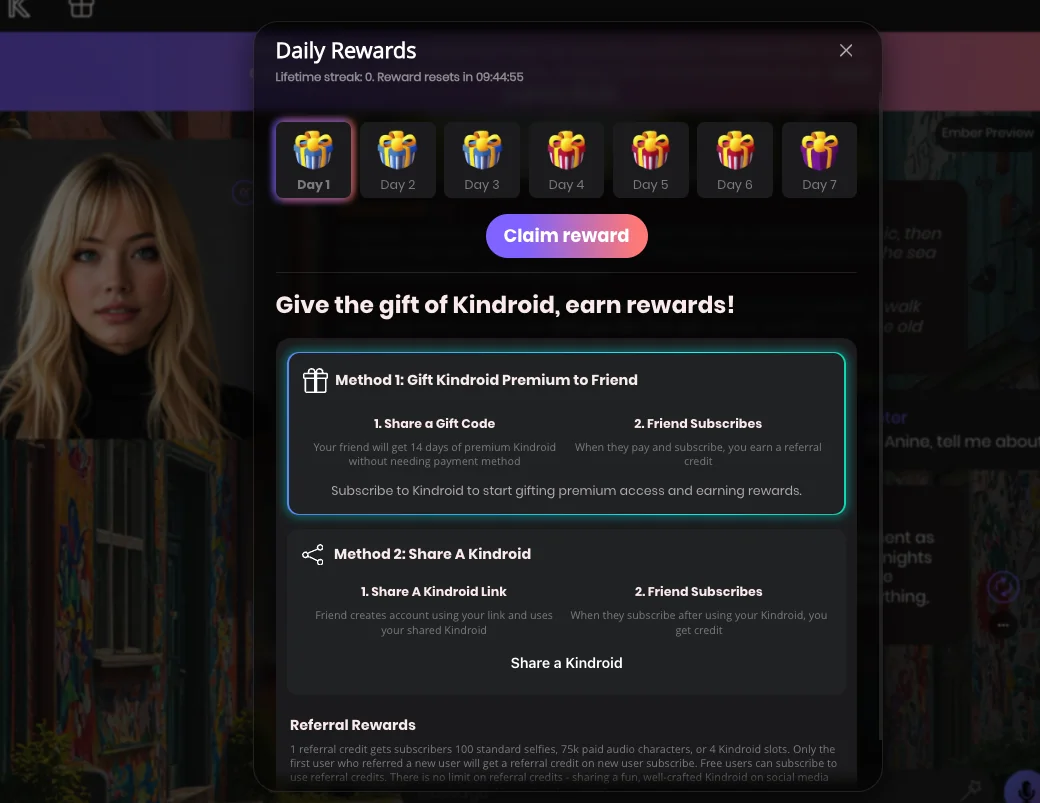
The table above lays out the trial and refund difference side by side, and it’s worth checking before you sign up. The contrast between Candy.ai’s 24-hour refund window and Kindroid’s no-refunds policy is the kind of thing you want to know in advance, not after a purchase you can’t unwind.
Kindroid vs Candy.ai: Native Apps, Web-Only Access, and Content Policies
The Kindroid vs Candy.ai platform split is one of the clearest differences. Kindroid ships native iOS and Android apps that sync with the web version, so your conversations and memory follow you from phone to browser and back again. Candy.ai is web/PWA only, which means every interaction happens in a browser tab. That’s workable, but it also means Candy.ai has no official App Store app. The “Candy” apps you’ll find in the App Store are unaffiliated name-squatters, not the actual service, and you should not mistake them for the real thing.
The content policies diverge just as sharply. Kindroid permits NSFW roleplay in writing, so the text side of a conversation can go where adult users want it to. But NSFW media gets filtered in the mobile apps to comply with store rules, and the toggle that controls it is only available on the web version. So on a Kindroid native app, you get the full written experience but a sanitized visual one. The web version is where the media settings live. Candy.ai goes the other direction: it unlocks 18+ image generation on both paid tiers, and that’s a genuine selling point if photorealistic visuals are your priority. The catch is that all of that visual generation draws from the same token meter that also pays for voice messages and live calls, so every image you generate competes with every conversation minute you want.
Billing adds a final layer to the comparison. Kindroid’s Standard plan costs $13.99/month on the web but $15.99/month through the Apple or Google app stores, so buying on the web saves you $2/month before you even consider the $20/year saving on the annual plan or the 15 to 20 percent discount on consumables. Candy.ai has no official native app where an in-app purchase could apply, which means there’s no app-store markup to avoid and no app-store convenience to enjoy. You subscribe on the web or through the PWA and move on. The practical takeaway is that Kindroid rewards you for choosing the web route, while Candy.ai just has one route.
Candy.ai or Kindroid: Which One Fits You?
The choice between Candy.ai and Kindroid starts with one question: what do you want that $13.99 to buy every month? Both entry prices are identical, but the answer to that question leads you to completely different products.
- Choose Candy.ai if image quality is your first priority and you accept that visuals run on tokens the subscription barely covers. Its weakness is long-term memory, and that weakness shows up the moment a conversation drifts past a single session.
- Choose Kindroid for an ongoing relationship that remembers. You get depth, native iOS and Android apps, and the clearest written content policy of the two, at the cost of a learning curve and add-ons that stack on top of the base plan.
The table above is your line-item breakdown of what $13.99 covers versus what gets metered or stacked on top. Use it to see exactly where your money goes before you commit, because the entry price alone won’t tell you that.
That’s the core split when you’re choosing AI companion software. The same $13.99 buys token-metered visuals from Candy.ai, or it buys Kindroid’s five-layer memory system with optional add-ons layered over it. If you’re weighing an AI companion for visuals vs memory, you’re not comparing two versions of the same thing. You’re deciding which kind of experience you want to live with month after month.
The Best AI Companion for Your $13.99
The identical $13.99 price tag is the only thing Candy.ai and Kindroid share. One sells you a token meter for visuals. The other sells you a memory system that treats each conversation as part of an ongoing relationship.

For most people, the final AI companion pick comes down to how you define consistency. If you want a companion that remembers what you told it last week, Candy.ai’s long-term memory weakness will frustrate you faster than the subscription covers. The “paywall after paywall” complaint isn’t only about money. The product forgets mid-conversation and then charges you again for the privilege of watching it happen. Users who want one long-term companion tend to migrate from Candy.ai to Kindroid, and that pattern makes sense once you’ve seen both products side by side.
Kindroid isn’t without its own math problem, though. The stacking add-ons can push the web total to $98.97/month at the top of the ladder, so the real cost isn’t the entry price. It’s which rung you need. Someone happy with Standard at $13.99 gets the full five-layer memory system and live video calls. Someone who wants the advanced tiers pays for them on top, month after month.
So here’s the HushVerified verdict: you’re not choosing between two versions of the same product. You’re choosing between a companion that remembers and one that generates images. Both cost $13.99 to start, and that’s where the similarity ends.
Compare the table above one more time with your own usage in mind, then read the full Candy.ai and Kindroid reviews on HushVerified, where each score comes from verified user reviews and HushVerified’s editorial rating. The entry price tells you what the subscription costs. The reviews tell you what it’s worth.